

Choripán
you might want to add this to your grill rotation this summer

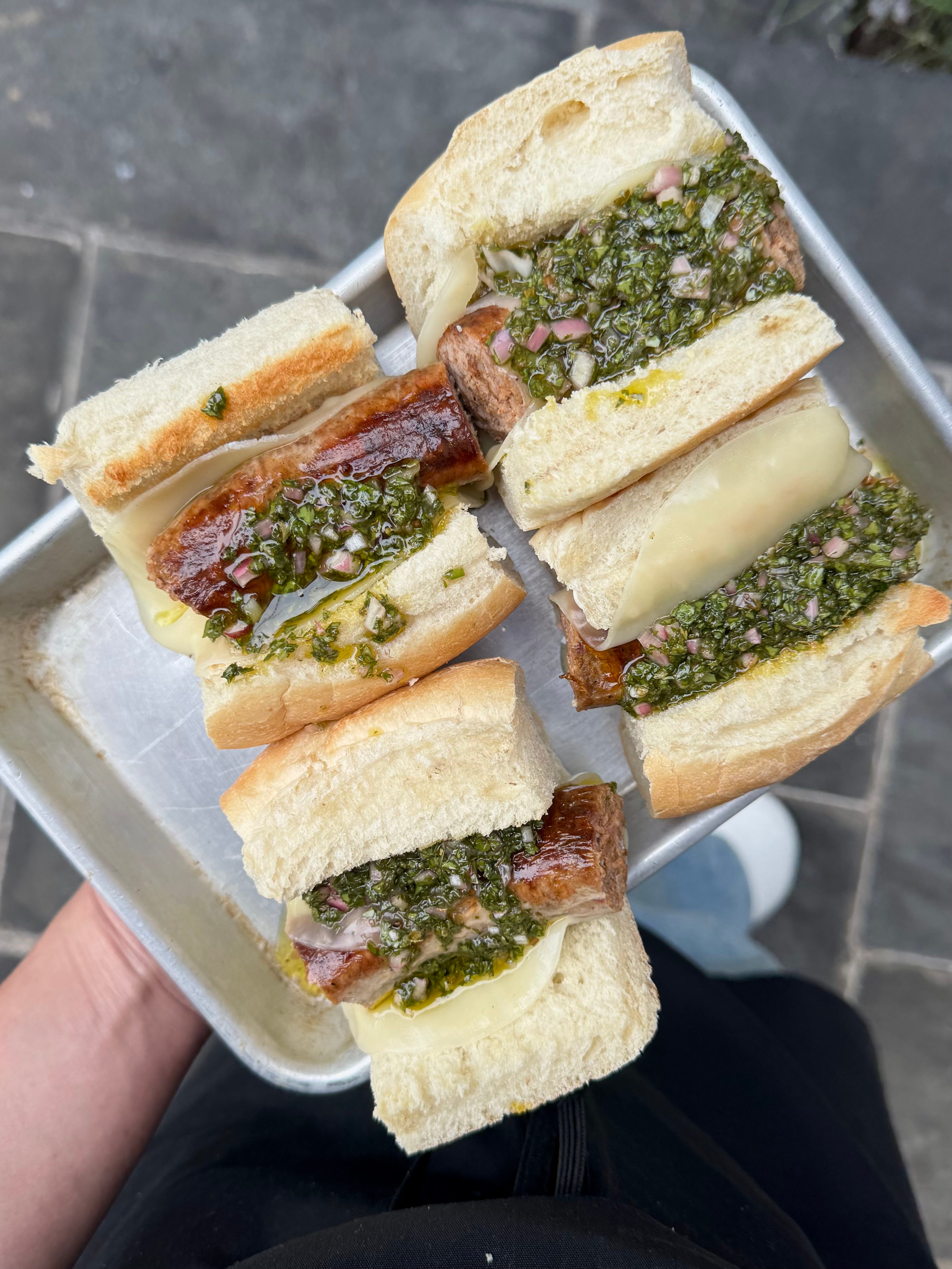
Generally speaking, the humble sausage isn’t exactly a glamorous food. It’s simple. Rough around the edges. Yet, its appeal is undeniable. So much so that you can find some version of a sausage in a roll in most countries. In the states, a good old fashioned hot dog reigns supreme. In Argentina, it’s all about choripán — a smoky, juicy chorizo sausage, grilled over an open flame and tucked into a crusty roll draped with a slice of provolone cheese, topped with a spoonful of chimichurri or salsa criolla. Leave it to them to make sausage seem sort of elegant.
It’s also the unofficial opening act of an asado—the traditional Argentinian barbecue. The asado isn’t just a meal, it’s a whole event. It usually starts in the late afternoon and stretches well into the evening with the asador (grill master) tending to the flames, raising and lowering the grates to slowly cook rather than char the proteins. They keep the menu simple and the sides to a minimum, with meat coming off the grill in slow, generous waves. First the choripán, then maybe sweetbreads or morcilla, and eventually larger cuts like flank steak, ribs, or butterflied whole lamb. It’s less about a formal sit-down dinner and more about abundance, and hanging out. Heaven.
A few weekends ago, Collin and I got to build our own version of an asado for a private dinner we cooked—a 40th wedding anniversary for one of our favorite couples. They’d celebrated their 20th anniversary in Buenos Aires with some of the same friends that were attending this party, so the theme felt like a sweet, full-circle moment. These people know how to throw a party.
One of my favorite parts of private cheffing is seeing how different people host. Some keep it casual, some go all out—but the best hosts are the ones who are actually enjoying themselves. Obviously, when you’re hiring a private chef for an event, you’re already going for it. But, whether you’re keeping things relatively straightforward or tenting the backyard, the goal is the same. It's also my opinion that whether you’re a good cook or can barely boil water, is somewhat irrelevant. An excellent host could be someone who orders pizza, chills a bottle of wine, and sets the vibe. It’s about making people feel comfortable and taken care of.
That being said, it’s always fun to see someone go all out. When we’re hired to cook for an event, it can sometimes happen that the host seems stressed. Totally understandable. They’re choosing to spend a little extra on food, which means they probably also chose to spend a little extra on flowers or rentals or a planner. Planning a party can become a real give a mouse a cookie situation. If you hire a private chef, you’ll probably want to hire a bartender. And if you hire a bartender, you might as well splurge on the wine. And if you splurge on the wine, you might as well rent nice glasses to drink it out of. If you’re renting glassware, you’ll probably want to throw linens, plates, and silverware in there too. And on and on and on. One thing can really lead to another and they want to make sure that they’re getting what they paid for.
But, there’s also something about a host who goes all out and then actually enjoys themselves at the party that makes private cheffing particularly fun. Like please! Eat the food! Savor it! Relax! What am I doing this for if not that kind of affirmation?? (Something to journal about later.)
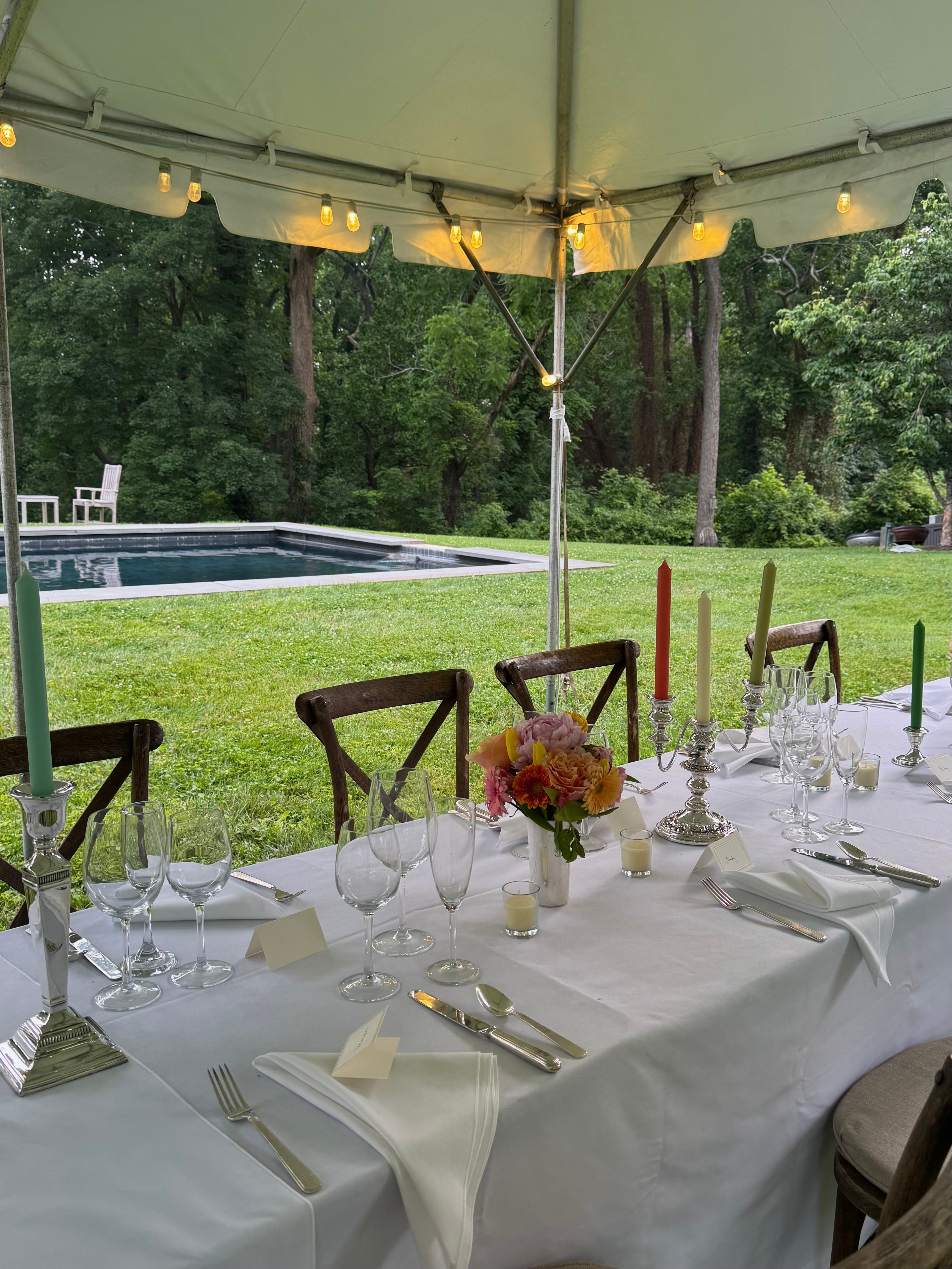
When we’re building a menu for a client, it always starts with a conversation. If it’s our first time working together, we’ll usually start with a few emails to lock down the basics—guest count, date, location—then hop on a call to talk about what they’re hoping for in terms of service format. From there, we’ll propose a couple of different menu concepts that fit the vibe and logistics, and they pick their favorite. We want it to feel collaborative but low-stress.
Since we’d cooked for this couple before, we already had a good sense of what they liked. We knew the party would start with a cocktail hour and flow into an outdoor seated dinner. We also knew they were down to have fun with it and we wanted to create something memorable and a little dramatic. Since we often work with a small team, cooking outdoors made a lot of sense—it’s theatrical, functional, and you can rent a big grill pretty easily. So we pitched three menu ideas:
A coursed out Tuscan feast with handmade pasta, steaks, and fennel-crusted ribs
Korean barbecue with marinated short ribs and lots of banchan on the table
Or a full-on Argentinian asado with a variety of specialty cuts, grilled vegetables, and choripán to kick things off
They went for the asado. Building a menu around a strong theme like that is my favorite kind of challenge. It reminded me of culinary school, when we’d dive deep into one country’s cuisine and end the unit with a giant, all-out feast. These days, I rarely get to cook a full spread inspired by a single country, and it was really fun pulling together all the details. I’ve been to Buenos Aires once, but mostly I relied on my family friends from there to make sure we got the details right. We tried to stay close to the spirit of an asado—big flavors, unfussy presentation, grilled everything, and enough food to feed a small army.
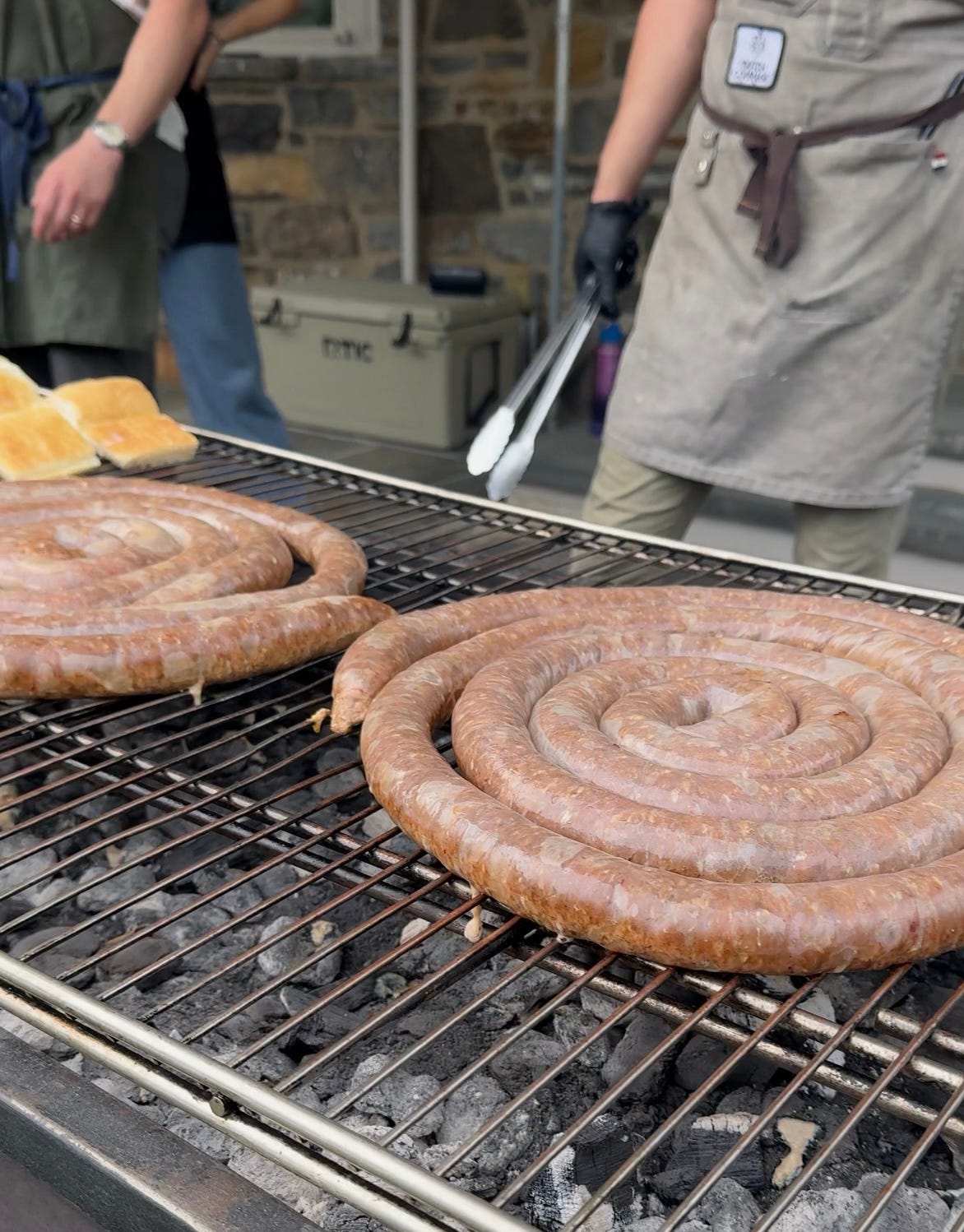
I’ll share more of the menu later this week, but today I want to spotlight the star of the show: choripán. Traditionally, chimichurri is served on the side so guests can sauce their sandwich as they like, but for this dinner, we dressed them ahead of time for a cleaner presentation. We made half with chimichurri and half with salsa criolla (a mix of tomatoes, onions, peppers, garlic, vinegar, and olive oil—kind of like an Argentine pico de gallo). Either one is perfect with the smoky sausage and crusty bread.
If you’re asking me, this sandwich deserves a spot at your 4th of July cookout. It’s grilled, it’s juicy, it’s got zippy sauces, and it only takes a few ingredients to make it shine. Serve it with a cold beer, and you’re halfway to Buenos Aires, baby!
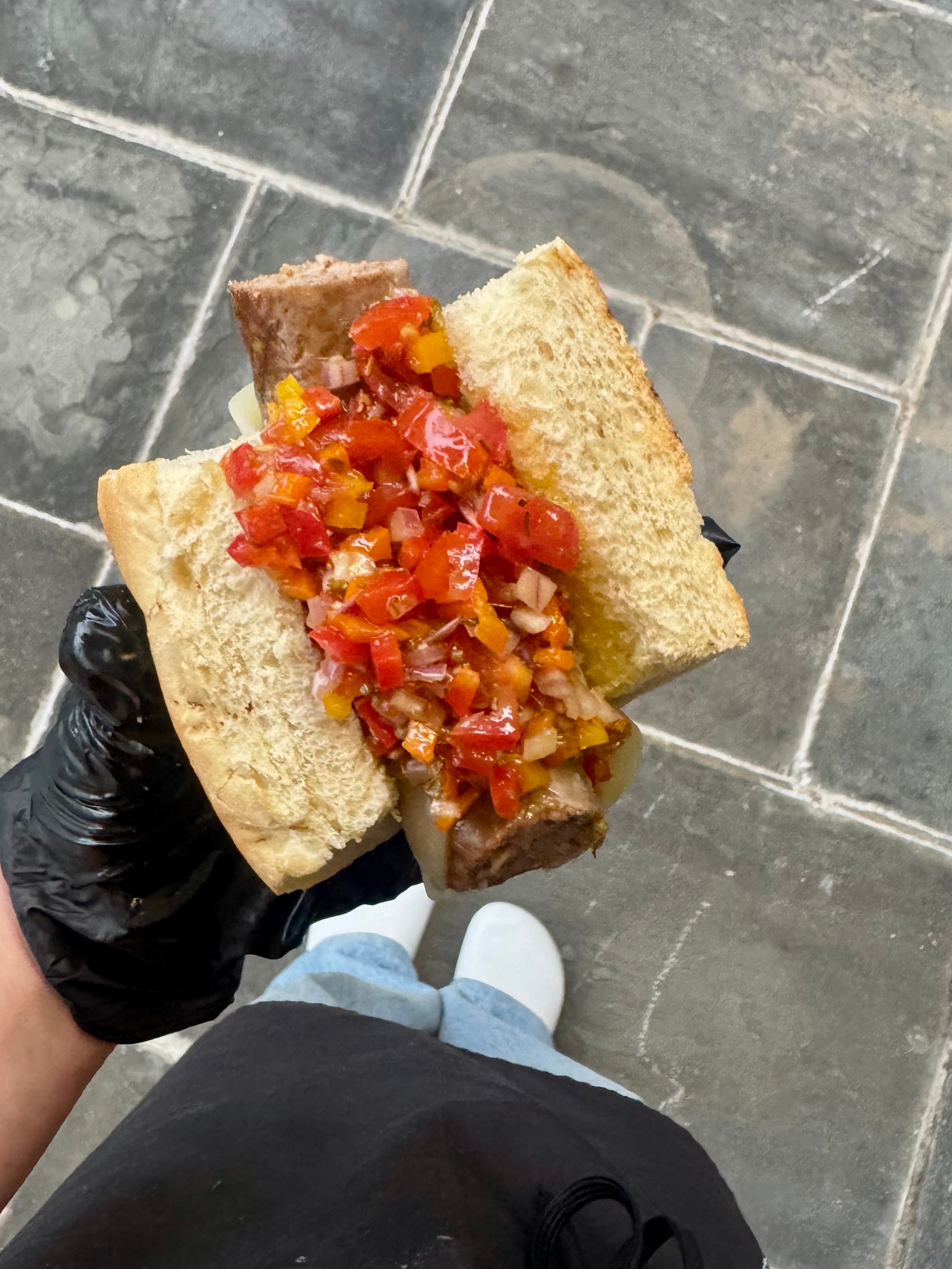
Choripán
Note: This is less of a recipe and more of an in depth tutorial on how to assemble these. Much of what you need for this is store-bought, but the specifics matter. For example, these are typically served on marraqueta or pebete. Both are white breads and and clearly French inspired but different than a traditional baguette. They’re softer with a thinner crust and sort of resemble the texture of a hoagie roll.
I’ll lay it all out for you but, what I’m saying is, expect lots of parenthetical field notes.
